All Topics
Cache Invalidation
Why invalidating a cache is so hard, from CPU caches to CDNs, and how stale data, stampedes and private-data leaks follow when you "just add a cache".
Computer ScienceCoding
Videos (2)

Podcasts (1)
Slide decks (1)
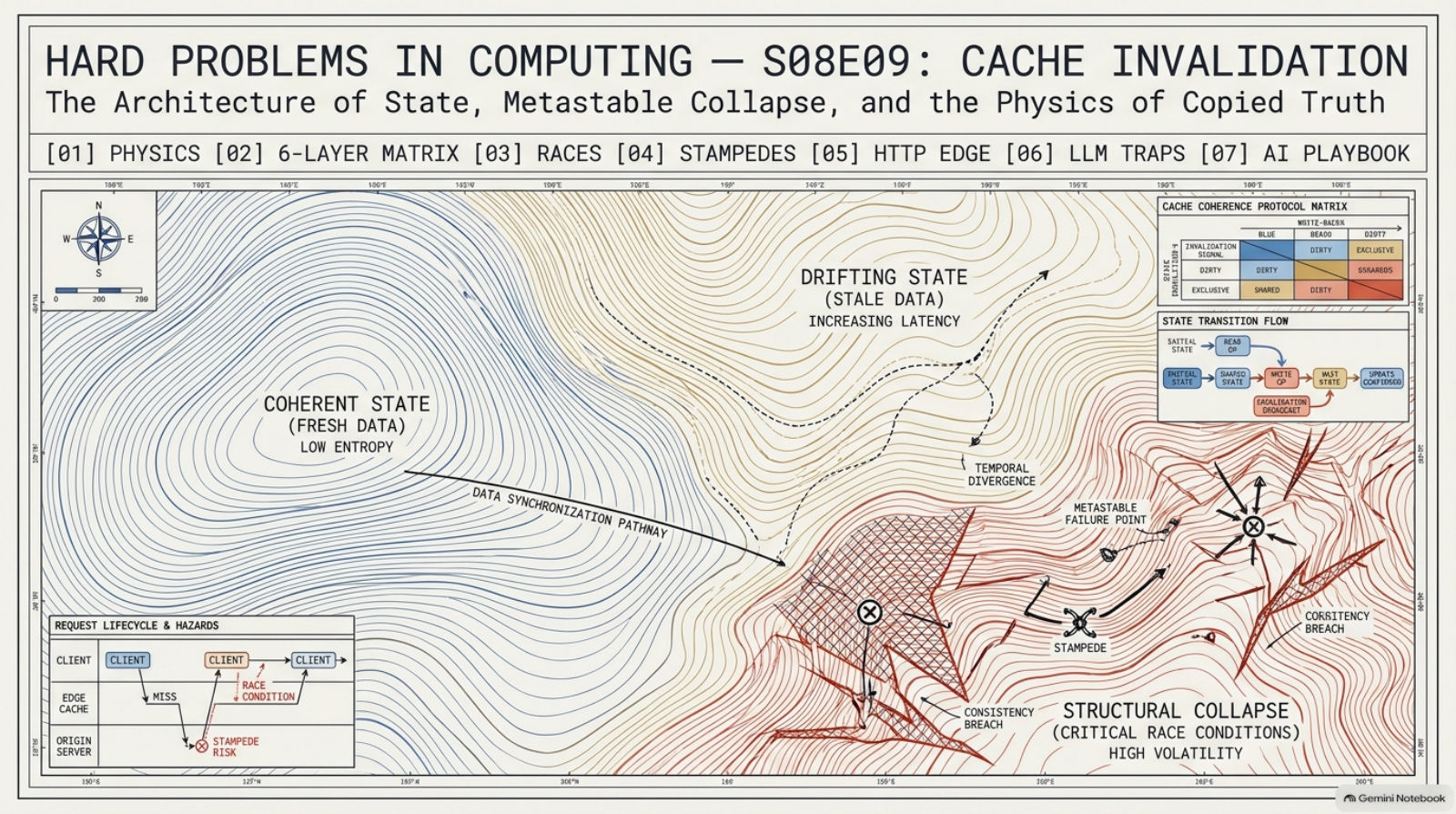
Infographics (1)
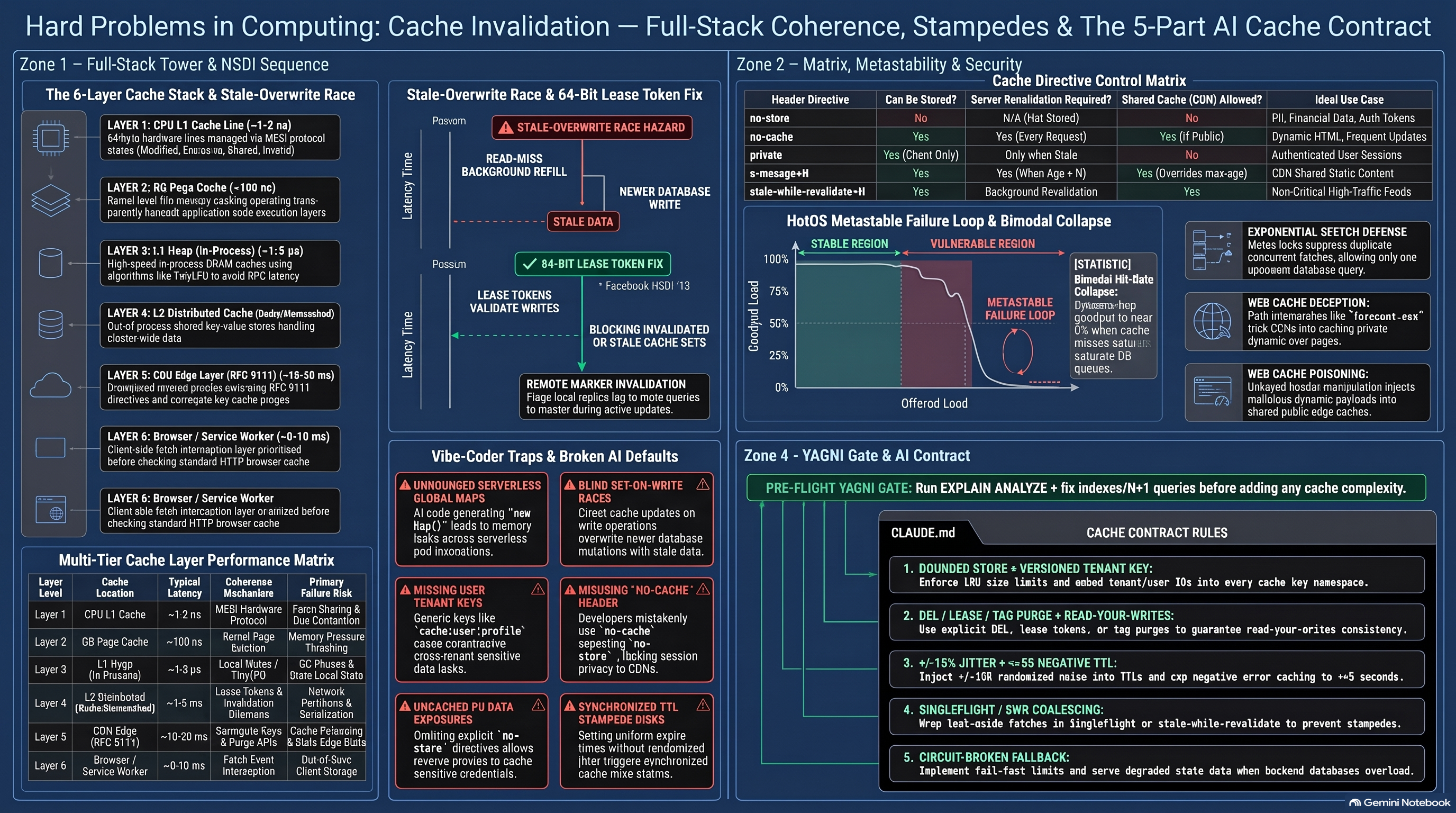
Sources (30)
- web page Cache-Control header - HTTP | MDN
- web page Caches, Modes, and Unstable Systems - Marc's Blog
- web page Caching and Revalidating (Previous Model)
- web page Caching best practices & max-age gotchas - JakeArchibald.com
- web page Caching challenges and strategies | AWS Builder Center
- web page Client-side caching reference | Docs
- web page Concepts overview — The Linux Kernel documentation
- web page ETag header - HTTP | MDN
- web page Edge Architecture Specification 1.0
- web page Efficiency · ben-manes/caffeine Wiki · GitHub
- web page Key eviction | Docs
- web page Mechanical Sympathy: False Sharing
- web page Population · ben-manes/caffeine Wiki · GitHub
- web page RFC 5861: HTTP Cache-Control Extensions for Stale Content | RFC Editor
- web page RFC 9111: HTTP Caching | RFC Editor
- web page RFC 9520: Negative Caching of DNS Resolution Failures | RFC Editor
- web page Read Your Writes
- web page Service worker caching and HTTP caching | Articles | web.dev
- web page Two Hard Things
- web page Vary header - HTTP | MDN
- web page Web cache deception | Web Security Academy
- web page Web cache poisoning | Web Security Academy
- web page Working with surrogate keys | Fastly Documentation
- pdf cpumemory
- pdf hotos21-s11-bronson
- pdf nsdi13-final170_update
- pdf osdi20-berg
- web page https://www.usenix.org/system/files/osdi25/lyerly-skybridge.pdf
- pdf p886-vattani
- web page singleflight package - golang.org/x/sync/singleflight - Go Packages