All Topics
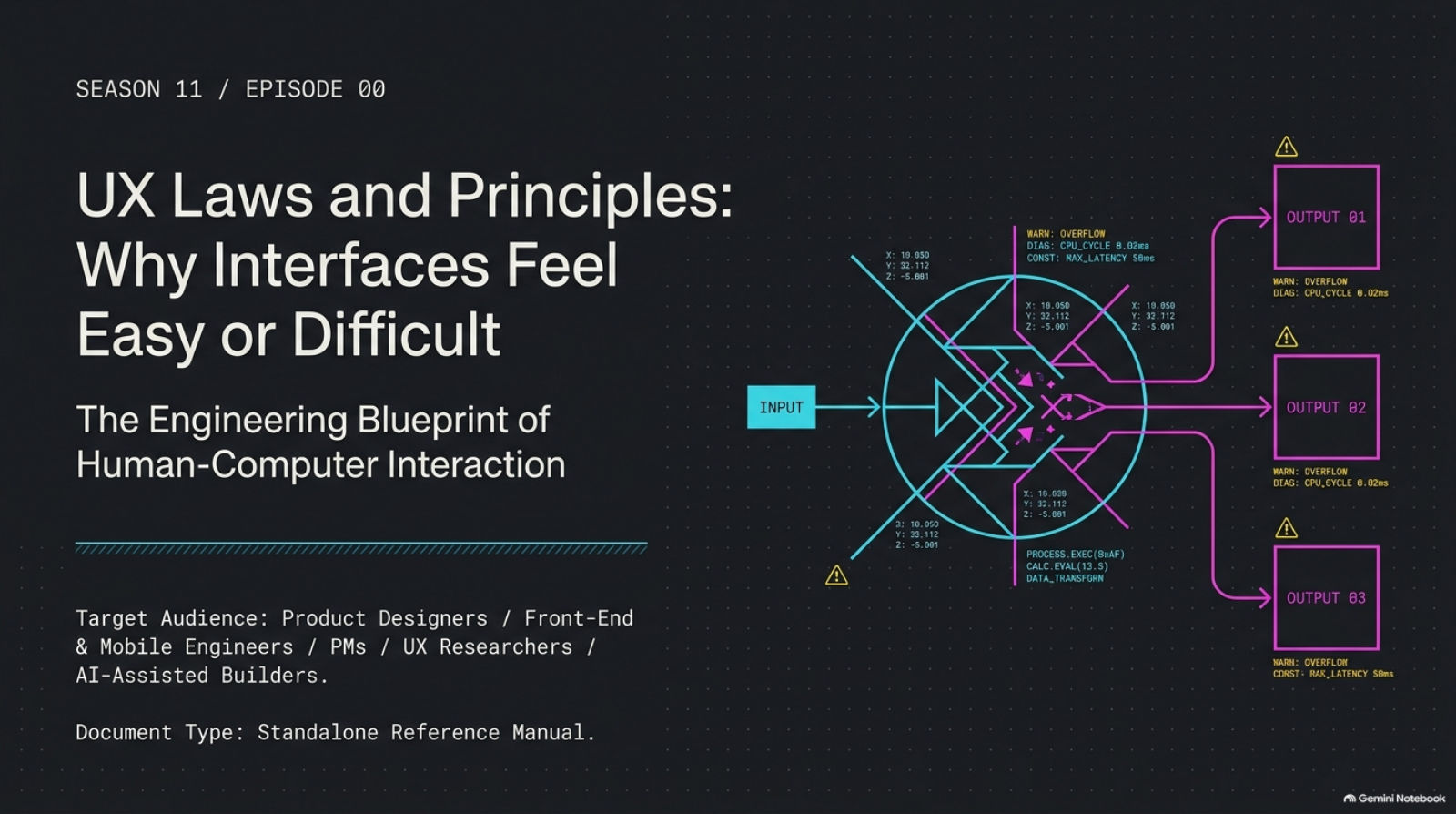
Why Interfaces Feel Easy or Difficult
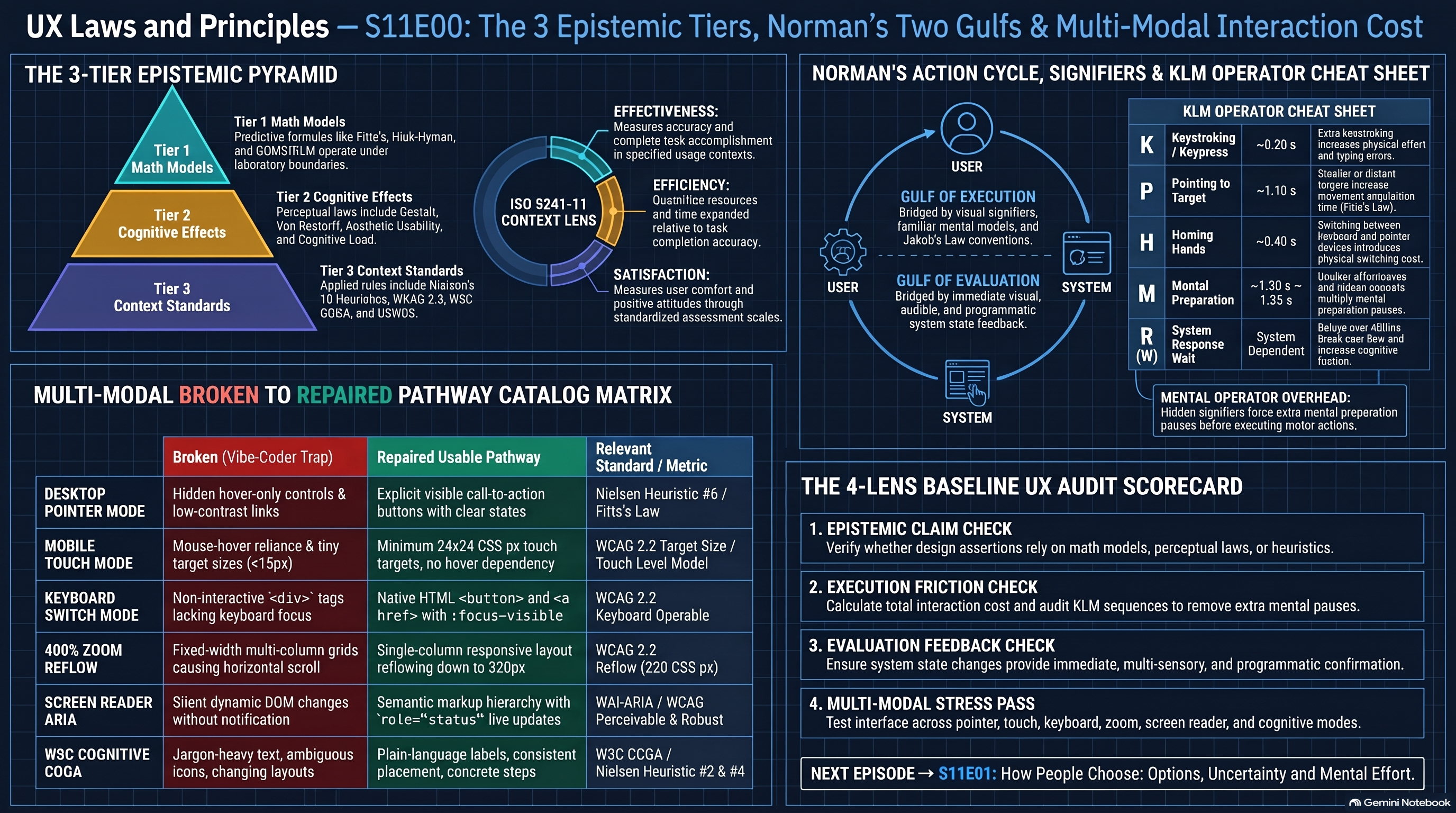
Why minimalist interfaces exhaust real users, and how to tell predictive models like Fitts's law and GOMS from psychological tendencies and rules of thumb, across Norman's two gulfs.
UX Laws and PrinciplesUXUX LawsUX Principles
Videos (2)
Podcasts (1)
Slide decks (1)
Infographics (1)
Sources (28)
- web page 10 Usability Heuristics for User Interface Design - NN/G
- web page Accessibility | MDN
- web page Accessibility, Usability, and Inclusion | Web Accessibility Initiative (WAI) | W3C
- web page Breaking Web Design Conventions = Breaking the User Experience - NN/G
- web page Cognitive load - Wikipedia
- web page Design principles | U.S. Web Design System (USWDS)
- web page Flat Design: Its Origins, Its Problems, and Why Flat 2.0 Is Better for Users - NN/G
- web page GOMS - Wikipedia
- web page Government Design Principles - GOV.UK
- web page Heuristic Evaluations: How to Conduct - NN/G
- web page Home | Laws of UX
- web page How People with Disabilities Use the Web | Web Accessibility Initiative (WAI) | W3C
- web page Human Interface Guidelines | Apple Developer Documentation
- web page Human performance modeling - Wikipedia
- web page ISO 9241 - Wikipedia
- web page Interaction Cost: Definition - NN/G
- web page Jakob's Law | Laws of UX
- web page Keystroke-level model - Wikipedia
- web page Making Content Usable for People with Cognitive and Learning Disabilities
- web page Mental Models and User Experience Design - NN/G
- web page Psychology for UX: Study Guide - NN/G
- web page Signifiers, not affordances – Don Norman's JND.org
- web page The Design of Everyday Things - Wikipedia
- web page The Two UX Gulfs: Evaluation and Execution - NN/G
- web page Understanding WCAG 2.2 | WAI | W3C
- web page Usability - Wikipedia
- web page Usability 101: Introduction to Usability - NN/G
- web page You Are Not the User: The False-Consensus Effect - NN/G