All Topics
How People Choose: Options, Uncertainty and Mental Effort
How people choose: cognitive load, what Hick's law really predicts, the choice-overload and three-click myths, information scent, sensible defaults and progressive disclosure.
UX Laws and PrinciplesUXUX LawsUX Principles
Videos (2)

Podcasts (1)
Slide decks (1)
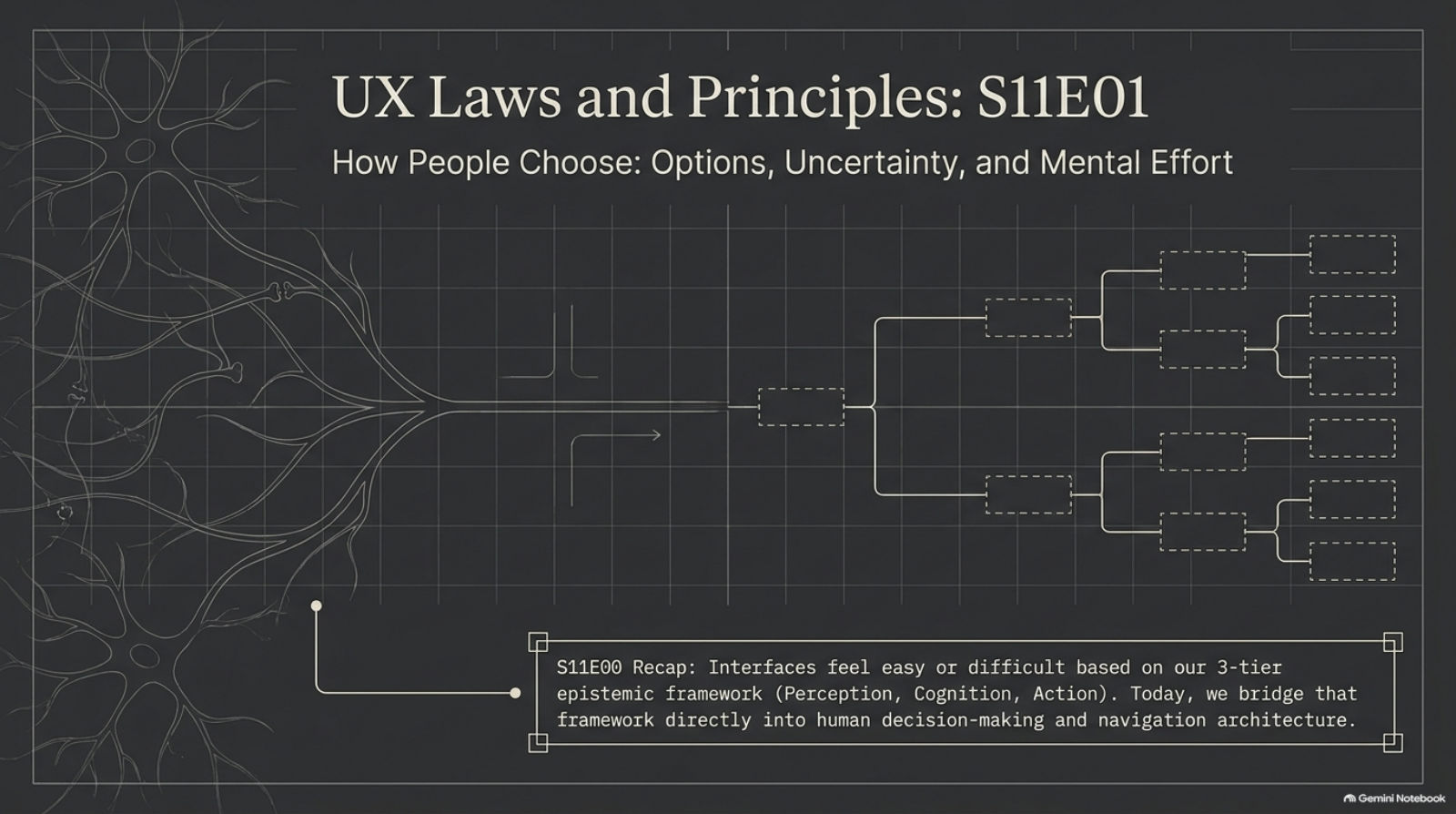
Infographics (1)
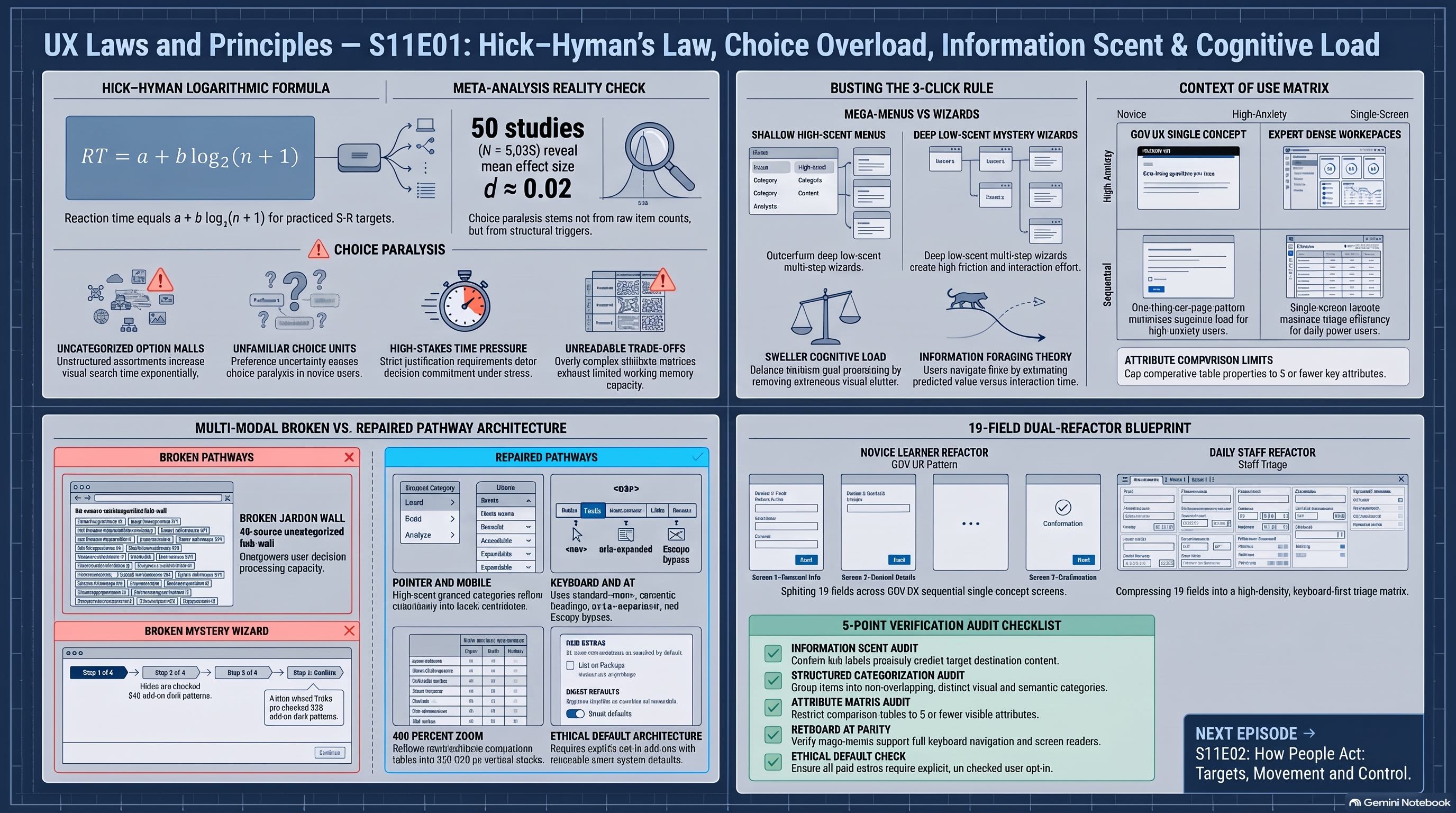
Sources (28)
- web page Choice Overload Bias - The Decision Lab
- web page Cognitive Load | Laws of UX
- web page Cognitive load - Wikipedia
- web page Comparison Tables for Products, Services, and Features - NN/G
- web page Deceptive Patterns in UX: How to Recognize and Avoid Them - NN/G
- web page Default effect - Wikipedia
- web page Flat vs. Deep Website Hierarchies - NN/G
- web page Hamburger Menus and Hidden Navigation Hurt UX Metrics - NN/G
- web page Hick's Law | Laws of UX
- web page Hick's law - Wikipedia
- web page How Chunking Helps Content Processing - NN/G
- web page Information Scent: How Users Decide Where to Go Next - NN/G
- web page Information Scent: How Users Decide Where to Go Next - NN/G
- web page Information foraging - Wikipedia
- web page Mega Menus Work Well for Site Navigation - NN/G
- web page Mental chronometry - Wikipedia
- web page Minimize Cognitive Load to Maximize Usability - NN/G
- web page Myth #2: All pages should be accessible in 3 clicks - UX Myths
- web page Overchoice - Wikipedia
- web page Progressive Disclosure - NN/G
- web page Question pages – GOV.UK Design System
- web page Simplicity Wins over Abundance of Choice - NN/G
- web page Tesler's Law | Laws of UX
- web page The 3-Click Rule for Navigation Is False - NN/G
- web page The Power of Defaults - NN/G
- web page https://ocw.mit.edu/courses/16-400-human-factors-engineering-fall-2011/7ab16b422ca0ba8a79c12d2_MIT16_400F11_lec21.pdf
- pdf ScheibehenneGreifenederTodd2010
- web page https://www.gov.uk/service-manual/design/structuring-forms